
What is the Risk of Dental Implant Failure?

While the risk of dental implant failure is low, as with any surgery there is a small risk of it not being successful. The possibility of failure can often be determined before the implant takes place, lessening the risk of it occurring after the surgery.

Failure soon after the implant could be due to overheating of the bone or poor bone quality, incorrect force applied during or after the implant or contamination of the implant or the implant site. These causes of dental implant failure can be reduced by using a qualified dentist who will assess the implant site correctly and follow proper, sterile procedures during surgery. Afterwards, it is up to the patient to follow all advice given on caring for their implants.
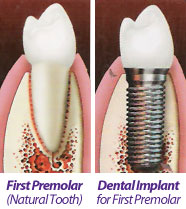
Dental-Implants-Tampa
Dental Implants

Care should be taken during the healing process to prevent dental implant failure caused by poor oral health. The dentist will instruct the patient on how to take care of an implant. Any unusual pain or swelling should be reported to the dentist immediately to ensure an infection will not occur.

Rejection of the implant or reaction to it is unlikely to be a cause of dental implant failure, since the materials used, generally titanium, have no known effects in the body and are bio-compatible (able to exist alongside living tissue without causing damage). The most likely cause of failure is if unrecognized bacteria already existed in the implant site when the implant was placed. Rejection can occur occasionally and is usually recognized by inflamed gums around the implant site.

The implant should be placed according to the biting forces of the individual’s mouth. Incorrect placement may cause the biting motion to place force on the implant which will  be disturbed. Care should be taken with chewing to prevent unnecessary force being applied to the implant. Teeth grinding can also cause a problem with an implant. If you grind your teeth, the dentist should be able to supply a guard to protect the implant.

Smoking may also be a factor in a failure. A smoker should discuss this with their dentist before beginning treatment.

Dental implant failure is rare – implants are reported to be around 93-95% effective. Even if a dental implant failure occurs, it is possible to place another implant on the same site, particularly if the cause of dental implant failure is recognized and can be avoided.

A consultation with your South Tampa dentist Dr. Marnie Bauer will tell you if dental implants can benefit you.

Call your South Tampa Dentist, Marnie Bauer DMD, for all of your dental needs – 813.839.2273

An Introduction to Dental Implant Procedures in South Tampa

An Introduction to Dental Implant Procedures in South Tampa

Dental implant procedure involve placing a titanium implant into the jaw and attaching a ceramic crown once the jaw bone has fused to the implant, securing it in place.

The methods of achieving this are varied, according to the condition of the implant site. The fastest procedure is done in a single day and can be performed if a tooth is replaced in a healthy gum over good bone. The most complex dental implant procedures involve grafting or growing new bone and can take six months or more.

If a tooth is broken or is decayed and needs to be removed, as long as the surrounding gum is not damaged, the replacement may be installed on the same day as the damaged tooth is extracted. It will require a temporary crown which can be replaced with a permanent crown 3-6 months later, once the bone fusion has taken place. Care should be taken with these implants and the patient might be advised to avoid certain foods for the duration of the healing process.

An ‘ordinary’ implant takes place in stages. At the first treatment, the implant is installed into the jawbone and left to fuse for 3-6 months. After this time, a post, called an abutment, is placed in the implant. Casts are then taken of the teeth and a crown made to match the existing teeth which is cemented onto the abutment.

The most complicated dental implant procedure occurs if the bone structure is not strong enough to take an implant, or if there simply isn’t enough bone. It is more common not have enough bone in the upper jaw, below the sinuses. In these cases a bone graft may be required, or bone can be stimulated to grow. This adds considerable time to the dental implant procedure since the bone must be allowed to heal before making the implant.

If the bone structure is not suitable, another option is the subperiosteal dental implant procedure, where a custom fit plate is made to sit between the jawbone and the gum. Measurements may be taken by CAT scan or by exposing the jawbone and taking a cast.

A consultation with your South Tampa dentist will tell you which is the right dental implant procedure for you.

Call your South Tampa Dentist, Marnie Bauer DMD, for all of your dental needs – 813.839.2273

Do You Need Dental Implants?

Dental implants are an artificial tooth root that a dentist places into the jaw to hold the replacement tooth or bridge. This is an ideal option for people in good general oral health who have lost a tooth or teeth due to periodontal disease, an injury, or some other reason. Dental implants are actually more “tooth saving” than traditional bridge work, since implants do not relay on neighboring teeth for support.

This advanced cosmetic dentistry procedure provides a natural-look and natural-feel teeth. You may forget that you ever lost a tooth. Your confidence about your teeth affects how you feel about yourself both professionally and personally. You might hide your teeth because of spacing, missing tooth or your dentures don’t fit properly. Dental implants can last years by properly caring and maintaining them. The procedure can be done on one or more teeth without affecting bordering teeth. It supports a bridge and eliminates the need for removal partial dentures. It also provides support for a denture, making it more secure and comfortable to you.

The ideal dental implants candidate  is someone who has good oral health and enough bone in their jaw that is needed to help support the implant. Those who have healthy gum tissues and are free from periodontal disease are the best candidate for dental implants. Dental implants are made up of titanium and metal fixtures that are placed within the jawbone with great precision. They provide a highly biocompatible surface, which enables bone to completely fill in and provide long-term stability.

This procedure is a team effort between you and your dentist. Your dentist will communicate with you regarding how your dental implants and where your implants should be placed. Dental implants are intimately connected with the gum tissues and underlying bone in the mouth.

Once the implants are in place, they also require the same care as you would give to natural teeth. In order to make to keep your implant clean and plaque-free, brushing and flossing still apply. After treatment your dentist will work closely with you to develop the best care plan for you. Periodic follow-up visits will be scheduled to monitor your implant, teeth and gums to make sure that they are healthy. Recovery from the dental implant procedures depends on a number of factors, one of which includes the various procedures required to complete your treatment. However, it is generally recognized that once an impact has been placed, maintaining diligent oral hygiene habits required to ensure proper fusing of the implant and bone structure. If cared properly, on implant restoration can remain in place for more than forty years.

Dental Implants as Part of Cosmetic Dentistry

Dental implants are one of the most popular services and products in cosmetic dentistry. They are teeth-like materials that are attached permanently to the gums to act as replacement for missing teeth. They are like dentures but are different since they are permanently fixed into gums and are not removable unless under the assistance of a dentist. Oral implants are usually made of titanium, one of the rare metals that are appropriately tolerated by the human body.

Who is a great candidate?

The procedure is available for people who have lost teeth due to an injury, a disease, or some other reasons. Implants are ideal options if you want to have natural-looking and natural-feeling false teeth, something that could not be possible by just merely using dentures. In other cases, people who are not content with how their teeth are aligned opt for dental implants. Natural teeth will have to be removed first before implants are put into place.

What are the types?

There are two general types of dental implants available today. First, the Endosteal uses cylinders, screws, or blades in surgically placing prosthetic teeth into the jawbone. An implant is holding one or more false teeth. Endosteal is the most prevalent type of dental implants and is used as an effective alternative for people with existing bridges and removable dentures.

Subperiosteal dental implants are surgically placed on top of the patient’s jaw. They are metal framework that protrudes through the gum, facilitating or holding the false teeth. This second type of dental implants is recommended more often to patients who are found to have minimum bone height. People who are not able to wear any kind of removable dentures are qualified to have subperiosteal dental implants instead.

Dental implant procedures can be a little complicated and can require the use anesthesia. It is important that only qualified and well-trained cosmetic dentists or other qualified dentists conduct the procedures. Dental implants have been around for more than three decades. The number of qualified dentists performing the activity is low but more dentists are undergoing training so they could very well conduct the procedure.

Dental implants are also regarded as an effective strategy in orthodontics. In many cases, the implant are used to simplify or streamline any orthodontic therapy, decreasing treatment frequency and eliminating dependence on patients’ compliance in wearing orthodontic appliances and making adjustments.

If you are not confident in your own smiles because of missing teeth, or if your dentures do not allow you to chew, speak or smile comfortably, it is time you seek South Tampa cosmetic dentist for the implants.

Call your South Tampa Dentist, Marnie Bauer DMD, for all of your dental needs – 813.839.2273 – Tampa Dental Implants or Implant Dentures